Collaboration is vital for improving educational outcomes. To drive sustainable progress in education, all levels of the system, such as the schools, families, communities, and governments, must work together. This multi-level collaboration doesn’t just enhance outcomes; it transforms the conditions of learning, making education more inclusive and responsive to all children.
Research highlights that effective collaboration can significantly improve child outcomes by addressing their academic, emotional, and social needs. By aligning efforts at local, regional, and national levels, educational systems can create a cohesive, supportive environment that helps all children thrive.
Collaboration Within Schools
Within schools, strong collaboration among teachers, school leaders, and counselors ensures children receive the support they need. A culture of trust encourages open dialogue and data sharing, helping educators identify challenges early and implement effective interventions. Studies show that when teachers collaborate, children’s achievement improves (UNICEF, 2022).
Collaboration Across Schools
Collaboration extends beyond individual schools to district-wide efforts. By analyzing data across schools within a Local Education Agency (LEA), districts can identify successful strategies and replicate them in other schools. This collective approach helps raise overall child performance, especially in underperforming schools (OECD, 2021).
Collaboration Across LEAs
Scaling effective practices across districts can bring systemic improvements. By sharing best practices and data-driven strategies, districts can make meaningful changes at a broader level. For example, collaboration between districts can lead to improved teacher training programs and more equitable resource distribution.
Collaboration with Community Partners
Schools can’t operate in isolation. By partnering with community organizations, social services, and health providers, schools can address the wider needs of children. For instance, partnerships with local health services help improve attendance and overall child well-being, directly impacting learning outcomes (European Commission, 2023). Community-based collaborations bring essential support services, ensuring that children’s academic success is not hindered by unmet emotional or physical needs.
The Ecosystem Model for Inclusive Education
A well-known model for effective collaboration in education is the ecosystem of support for inclusive education. This model emphasizes the need for collaboration not just within schools but across various sectors, such as health, social services, and local communities. When these systems collaborate, they create a comprehensive support network that addresses all aspects of a child’s development (European Agency, 2017).
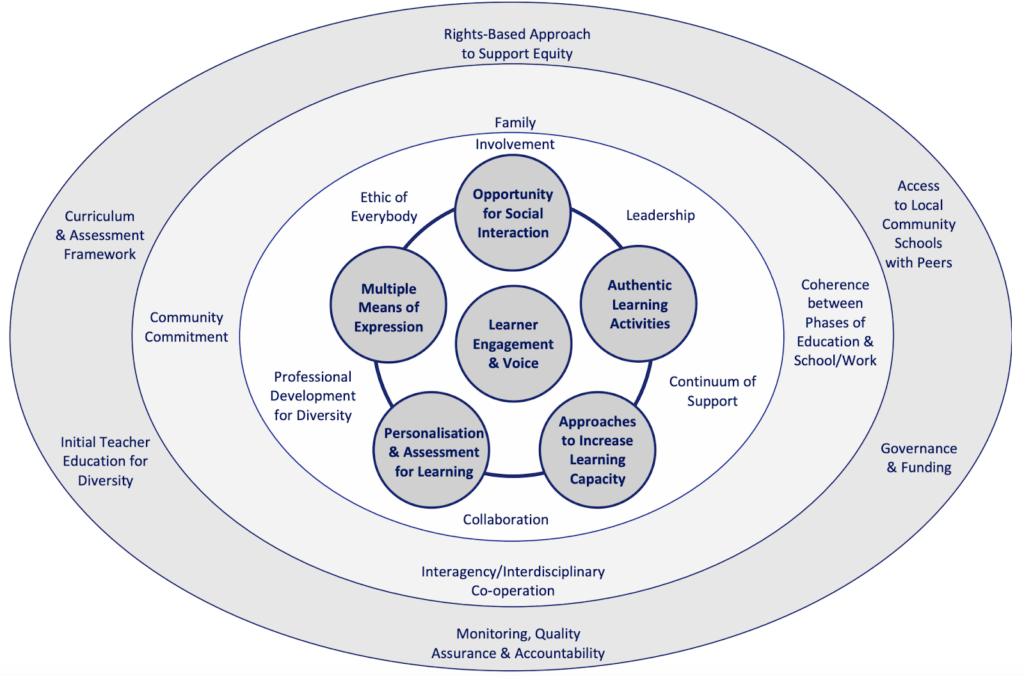
Figure 1: The ecosystem of support for inclusive education model (source: European Agency, 2017, p. 11)
The ecosystem model shows the importance of both vertical (between different government levels) and horizontal (across sectors like education, health, and social services) collaboration. These partnerships are essential for creating an inclusive education system that is adaptive and responsive to the needs of all learners.
How You Can Get Involved
Collaboration can happen in small but impactful ways. Educators can engage with colleagues to share best practices. Families can communicate with teachers to align support at home and school. Community leaders can offer resources and mentorship to schools, enhancing learning opportunities.
When schools, communities, and governments collaborate effectively, the results are transformative. Education becomes more inclusive, and learning conditions improve for all children. Whether at the classroom, school, or district level, collaboration is key to creating an environment where every child has the opportunity to succeed.
At WCA, we are committed to supporting and facilitating this kind of collaboration. By helping connect communities, educators, and policymakers, WCA ensures that the full spectrum of support for children is realized. When all sectors and levels of the education system work together, children grow with confidence, learn with purpose, and feel valued and safe.
References
European Agency for Special Needs and Inclusive Education. (2017). Key processes enabling cross-sector collaboration for inclusion (p. 11). European Agency for Special Needs and Inclusive Education. https://www.european-agency.org/sites/default/files/Cross-Sector%20Collaboration%20and%20Governance%20in%20Inclusive%20Education%20Systems.pdf#:~:text=This%20background%20paper%20aims%20to,cross%2Dsector%20collaboration%20(CSC)%20for%20inclusion.
OECD. (2021). Education Policy Outlook 2021: Shaping responsive and resilient education in a changing world. OECD Publishing. https://www.oecd.org/content/dam/oecd/en/publications/reports/2021/11/education-policy-outlook-2021_db3690b0/75e40a16-en.pdf
UNICEF. (2022). Community engagement raises families’ awareness and helps to protects their children’s future. UNICEF. https://www.unicef.org/syria/stories/community-engagement-raises-families-awareness-and-helps-protects-their-childrens-future