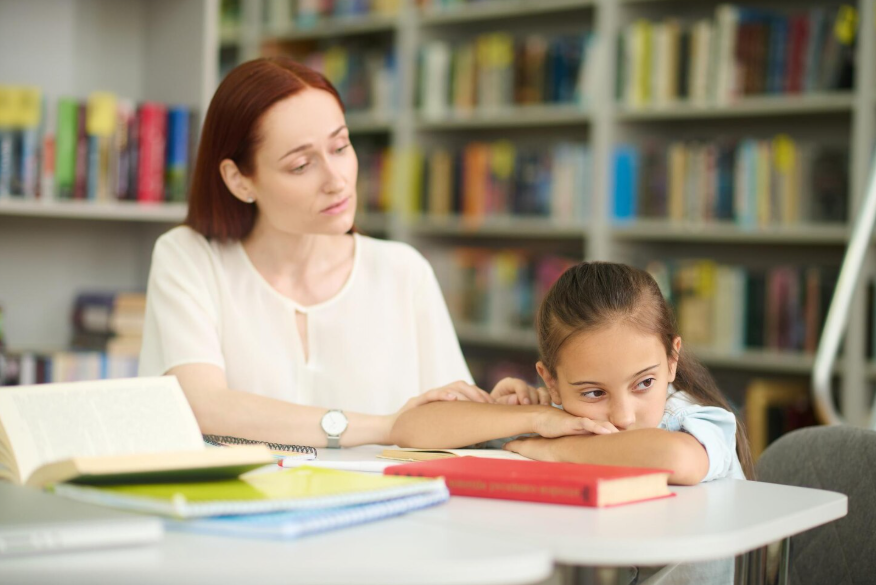
“Miss, my stomach hurts again.”
The teacher didn’t send him to the nurse this time. She gently asked, “Do you want to tell me what’s really going on?”
After a pause, the 9-year-old whispered, “I miss my dad.”
That moment changed everything. Instead of a reprimand, he received understanding. Gradually, his stomachaches faded. He laughed again, focused again — and learned again.
This is what learning that heals looks like.
It’s not a new subject or a one-time workshop. It’s a mindset, one where every interaction becomes a chance to restore trust and safety. Children who have lived through adversity don’t need tougher rules; they need steadier relationships.
A recent open-access study by Maloney et al. (2024) in Social and Emotional Learning: Research, Practice, and Policy describes exactly this kind of healing-centered education. The researchers propose a Transformative Social and Emotional Learning (TSEL) + Trauma-Informed Practices in Schools (TIPS) framework — a practical “theory of action” that guides schools through three steps: awareness, assessment, and action.
Their case study from British Columbia shows what happens when schools, government, health services, and adolescents collaborate to put this into practice. Teachers learned to recognize trauma as an experience, not a label; policies prioritized belonging and consistency; and the results showed better student well-being and stronger relationships. The takeaway: healing-centered education is feasible, measurable, and deeply human.
Meanwhile, a 2024 review by Corinne Meier in the South African Journal of Childhood Education brings the science behind this approach to life. Her research explores how early childhood teachers in South Africa are redefining their pastoral role — using insights from neuroscience to understand how trauma reshapes young brains.
When children face neglect or violence, Meier explains, their developing brains can experience structural and chemical changes that affect emotion, memory, and learning. But teachers can help rewire these patterns. By fostering safety, empathy, and predictability in the classroom, they activate the brain’s plasticity — its ability to heal and grow through positive relationships.
Together, these studies remind us that education is never just academic. It’s biological, emotional, and profoundly relational. When teachers, policymakers, and funders invest in trauma-informed, emotionally intelligent systems, they aren’t just improving learning outcomes — they’re helping children rebuild trust in the world around them.
At Whole Child Advisors (WCA), this is what we mean by learning that heals:
a holistic, neuroscience-informed approach where care and learning are inseparable.
💬 Need help designing healing-centered systems? DM us — we’d love to collaborate.
References
-
- Maloney, J. E., Whitehead, J., Long, D., Kaufmann, J., Oberle, E., Schonert-Reichl, K. A., Cianfrone, M., Gist, A., & Samji, H. (2024). Supporting adolescent well-being at school: Integrating transformative social and emotional learning and trauma-informed education. Social and Emotional Learning: Research, Practice, and Policy, 4, 100044. https://doi.org/10.1016/j.sel.2024.100044
- Maloney, J. E., Whitehead, J., Long, D., Kaufmann, J., Oberle, E., Schonert-Reichl, K. A., Cianfrone, M., Gist, A., & Samji, H. (2024). Supporting adolescent well-being at school: Integrating transformative social and emotional learning and trauma-informed education. Social and Emotional Learning: Research, Practice, and Policy, 4, 100044. https://doi.org/10.1016/j.sel.2024.100044
-
- Meier, C. (2024). A review of trauma-informed neuroscientific theory to unpack the early childhood education teacher’s pastoral role in South Africa.South African Journal of Childhood Education, 14(1), a1462. https://sajce.co.za/index.php/sajce/article/view/1491/3234